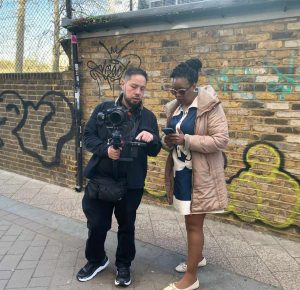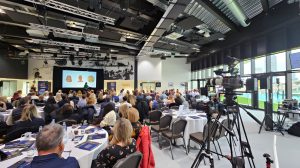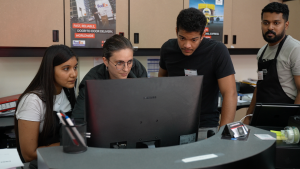
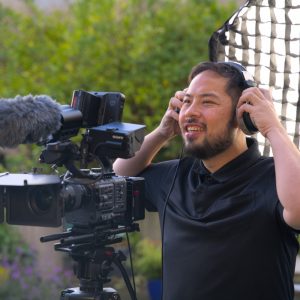
A customer testimonial video is a video from one of your customers, telling the camera, and therefore your potential customers, why they chose your services or goods, and how it changed them. Whether that’s changed their lives, their business, made them happier, or improved things in some other way. Because they’re real customers with real opinions, it gives the viewer social proof. They can step into that customer’s shoes and imagine being that customer, getting those same benefits. It is probably the most persuasive video form across a video strategy.
I’m Ken Chu. I’ve been working around video, tech and the corporate sector for around 20 years. I love telling human stories, which is exactly what testimonial videos are. I also make case studies and brand films for charities, healthcare, finance and tech. Testimonial films are the sort of films we make a lot of as part of our business videography service.
This guide shows the process I use, and you can follow it whether you decide to use a videographer or do it in house. It fits especially well for Business to Business situations. Business to Consumer is slightly different but there is still a lot of relevance.
It covers:
- Which of your clients are the best ones to ask for a testimonial
- How to form your questions
- How the filming day works
- Release forms and consent
- Editing, length and subtitles
- Where the testimonial videos should be placed for effectiveness.
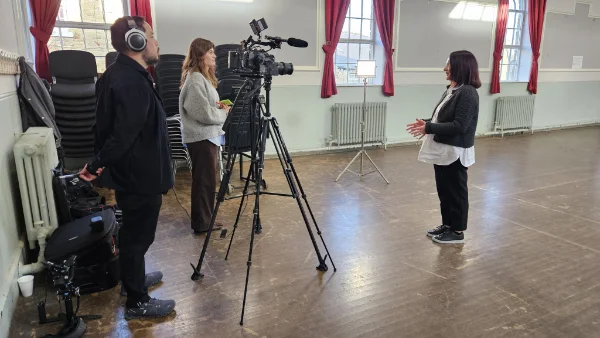
Why testimonial videos work better than written reviews
We take in far more from a video than we ever do when reading a block of text. People tend to remember much more of what they watch than what they read. Think about it yourself. When you read a news article in the paper or on a website vs watching the same new report on the 10 O’Clock news. But with testimonials specifically, it goes further.
When someone watches a real person, with the images, the music, the narrative and the things they’re saying all coming together, it’s a two plus two equals five situation. It adds up to more than the sum of its parts. They can imagine being that person and being in their shoes.
There’s less friction for the viewer’s mind to wander towards the idea that this person could be them. When people see someone similar to themselves, it’s very easy to believe what they’re hearing.
The main types of testimonial video
Most testimonial videos fall into one of five formats. Each suits a different place in your marketing, and a single well planned interview can feed several of them.| Format | What it is | Typical Length | Where it works best |
|---|---|---|---|
| Single Client Story | One client, one interview, filmed at their premises with footage of their work | 90 seconds to 3 minutes | Service pages, sales proposals |
| Multi client compilation | Three to five clients answering the same few questions, cut together | 30 seconds to 3 mins | Homepage, LinkedIn, trade stands |
| Case study film | A client interview plus footage of the project itself, told as challenge, approach and outcome | 2 to 4 minutes | Sector pages, pitches, award entries |
| Short social clip | One strong answer cut from a longer interview, subtitled, in square or portrait format | 15 to 45 seconds | LinkedIn, Instagram, paid social |
| Event vox pops | Quick reactions from attendees on the day, woven into a highlight film | 30 to 90 seconds | Event marketing, next year’s ticket sales |
Vox pops are similar but all together a different type of animal. They are filmed fast and in busy rooms; we cover them as part of our event videography work. The rest of this guide focuses on planned client interviews, which is where most businesses should start. It fits especially well in business to business (B2B) situations.
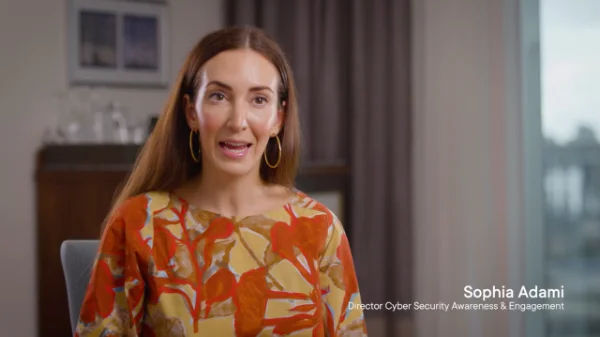
Choosing the right clients to ask
Obviously you want to pick a customer who’s going to speak nicely about you. But also pick one you’ve got a good personal relationship with, because that comes through on the day. And it makes sense to choose a customer similar to the sort of work you want more of, so you attract more of that kind of client. Again, it’s a shorter link for the viewer to make. They see someone like them, and the connection’s easier.
It also makes sense to pick someone you’ve worked with recently. Your work and the project they reference in the testimonial is still fresh for them, so they don’t have to cast their minds too far back to remember how it went. But it’s also about your own work. The further down the road you go as a business, the more your work develops and the better it gets. It’s closer to the next project you want to land. A recent customer is a truer reflection of the standard you’re working at today.
When it comes to specific people to talk to, it works really well to get a few different angles. For example, let’s say your business sells a new type of hammer. You’d want an angle from the person who uses the hammer every day to get an understanding of how the hammer has affected their daily work. But also you want to speak to someone in the leadership team, who makes strategic decisions. They can talk about how the hammer has positively affected the company’s outlook and how the business as a whole has been transformed by your awesome hammer. Afterall, it’s these sorts of people that hold the purse strings to buy your hammer.
How to ask a client to appear on camera
If you’ve got an especially good relationship with the customer, it’s probably not that hard to ask them for something. Maybe they owe you favour? It can still be a little bit uncomfortable, but the thing that makes it easier is to make it worth their while.
For some customers there is something positive for them. If a company owner is happy to go on camera and say they hired your kind of business, it shows them off as a serious operation doing cool, ambitious work. It makes them look good. It makes them look credible. If we go back to the hammer example. It makes them look like they are really considering their tools and every detail is important to the service they are offering.
There’s another benefit too. If someone features in your testimonial, you’re going to post it on your social media, and because it mentions them, they get a share of that exposure. The video gives people a peek behind the curtain, a look at how their business operates, the type of cool stuff they are doing in collaboration with your products. Featuring that partnership shows one specific part of it: why they’re successful, because they partner with solid, reliable businesses. A good video is expensive and a real endeavour to organise, but if someone else is doing it for you, and you just show up and look good, that’s a gift. It’s a bit like going on someone’s podcast and getting to talk about your business.
Now, all of this is quite B2B. It’s about businesses who partner with other businesses, which is a lot of my work. If you’re doing a B2C testimonial, where your customer is a member of the public, the benefits are different. They don’t need credibility or exposure, so you give them something instead, a gift of some sort, a little thank-you for their time.
When I’ve done work for a charity I work with, we get contributions from beneficiaries, and what they get in return are gift vouchers for high street shops or online stories (Love2Shop, One4All, Amazon). You see it elsewhere too. When people take part in market research, the qualitative kind where you sit behind a one-way mirror with a group of people, they get a bit of cash in an envelope. Same idea. You’re giving someone something in return for their time and their contribution.
I’m always surprised at how helpful people want to be with regards to giving testimonials and I firmly believe that people genuinely want to help other people. Especially business owners.
The question framework that produces natural answers
One of the most obvious ways a testimonial video goes wrong is when it becomes overly scripted. As mentioned before, the aim of testimonial video is for a prospective customer to see another human being go through a problem they are going through but go that one step further in finding a solution. “Human beings”.
That’s the most important part of the whole thing. So we need to retain the human nature of your customer. They should speak freely and tell their own story, make mistakes when they speak, hesitate, say erm and ah, look around the room as if searching for an answer. All we have to do is guide them with questions and mould the conversation. The questions we ask are determined by a tried and tested structure.
I build every testimonial interview in five stages. Each one moves the story forward, so the edit almost assembles itself.
| Stage | What it draws out | Questions I ask |
|---|---|---|
| Context | Who they are and what they do | “Tell me about your organisation and your role.” “What does a normal week look like for you?” |
| The challenge | What was not working before | “What was going on before you started looking for help?” “What had you already tried?” |
| The decision | Why they chose you | “What made you choose us?” “Did you have any reservations at the start?” |
| The experience | What working together was like | “What stood out about how the project ran?” “Was there a moment when you knew it was going well?” |
| The result | What is different now | “What has changed since?” “What would you say to someone in your position who is thinking about it?” |
Why that order? Because it’s the shape of every story we’ve ever heard. Every film, every fairy tale we’re told as children, they generally have similar acts. There’s a challenge. The person meets the challenge and resolves a problem. And then they live happily ever after…
The reservations question surprises some clients, but it is one of the most valuable in the set. An honest hesitation that was overcome is far more convincing than unbroken praise, and it answers the doubts your prospects are quietly holding.
Three techniques make the difference on the day:
- Ask them to include the question in their answer. In the edit, we remove the interview’s questions, so it just the customer talking. So the interviewee needs to answer in full sentences so the statement stands on its own. Therefore it needs to contain the question and provide full contents. For example, "Why did you choose us?" needs an answer that starts "We chose Awesome Hammers because…". I explain this before we start and give a gentle reminder when needed.
- Ask for specifics. When someone says the project was "really helpful", I follow up with "Can you give me an example?" Numbers, names and moments are what make a testimonial believable. And we can do some really great stuff with on screen text animations to bring it to life.
- Ask the important things twice, in different words. The first answer is often the rehearsed one; the second is usually more natural. You might ask it later in the interview. I also close every interview with "Is there anything I haven't asked that you'd like to say?", which regularly produces the best line of the day.
I was filming a testimonial video for a very confident customer that was keen to show a strong, successful and professional persona (you know the type…). When they were asked the questions “what sort of problems did you have before you started using this product”, they responded with “We’ve never had any problems! The product just made us better!”.
Now, as business owners we know that it’s impossible to run a business without the smallest of problems. So we knew something was there, but it just needed coaxing out. We continued with the interview, and the customer became a little softer, warmer and put on less of a front. In other questions they were mentioning improvements that the client’s product had brought. So towards the end of the interviews we asked “You mentioned improvements? What was happening before, when things weren’t quite as good?”. At this point they unleashed all of the problems that had before.
This gave us fantastic context and the problems they mentioned were the most common in the industry that the product was designed to fix. In the edit they became the most important parts of the interview. Send your client the topics in advance, not the exact questions. That gives them time to think about the project without rehearsing answers, and rehearsed answers are the ones that sound flat on camera.
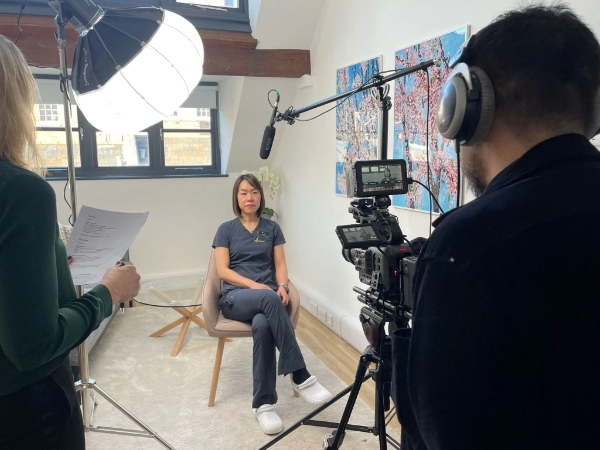
Preparing your client for filming day
A good videographer won’t just turn up on the day. If your customer’s happy to spare the time, they’ll want to meet them first and do a recce at their premises. There’s a reason for both.
Filming usually happens at your customer’s workplace, because that’s where their story lives. It’s their environment, and often the best moments are your product or service out in the wild, with their team genuinely using it. So the videographer walks the space with your customer, works out where to film, maybe at a desk, maybe a communal area, and starts picturing it with them. ‘We’d film here, you’d sit here, lights around there.’
This is also the moment to walk your customer through what’s planned. ‘So here’s what we want to do. We’d film you at your desk, doing your day to day. But that day to day relates to your guys out in the field, the colleagues you’re communicating with through the software. So we’d want to film them too, the hands-on people out on the job. Have you got anyone who’d be up for that?’
It’s worth being open about it, because a fuller film borrows time from more than one person: not just your customer at their desk, but their team as well. It’s best to flag that early and make sure they’re happy, rather than spring it on the day.
And just as important, it breaks the ice. The videographer gets to know your customer without a camera in the room, your customer hears exactly what the plan is, and there are no surprises on the day.
During this reccy its good to talk about some other things to settle their minds:
- Clothing. Plain colours work best. Fine stripes and small checks can weird distortions on camera (moire), and large logos from other brands are best avoided. We can fix things like rogue logos but it can be work intensive during the edit.
- Timing. Tell them how long they are needed for and when. Setting up happens before they arrive, so their part is usually under an hour.
- Reassurance. They can pause, restart or ask to redo an answer at any point, and nothing is published without their approval.
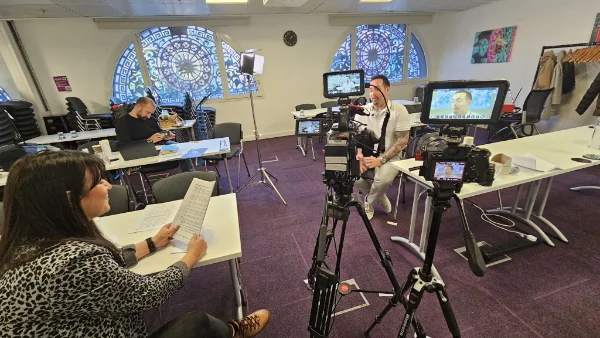
Most people don’t enjoy the idea of being filmed to varying degrees. As filmmakers, we are very much used to this. Putting interviewees at ease is a large part of our job; it is something clients often mention about our shoots, and you can read some of their comments on our testimonials page.
What happens on the day
A single client testimonial usually takes a half day to a full day of filming. A typical schedule looks like this:
- Arrive, and unload. If we haven’t been able to do reccy for any reason we’ll look around the space with you for good spots to conduct the interviews.
- Set up lights, cameras and microphones (about 45 mins, mostly before the client is needed)
- The interview itself (30 mins per person)
- Footage of the client at work, their team, premises or product (1-2 hours, sometimes a whole afternoon)
- Pack down, back up footage, tidy up.
A few production choices make a visible difference to the finished film:
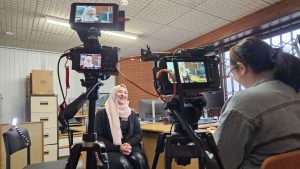
- Two cameras. One wide shot and one closer shot let the editor shorten answers without visible jumps.
- Sound first. Use a clip on lavalere mic and a boomed shotgun microphone. One is a back up for the other as failed audio is a failed shoot.
- Conversation, not broadcast. The interviewer sit just beside the camera, so the client talks to a person rather than a lens. When the camera is framed, the interview subject is lined up on a a left or right third, with their eye line looking into the remaining two thirds. This “negative space” is great for dropping text and animations to support the things they are saying.
- Footage of the real work (B-Roll). Shots of the client’s workplace and the project in action give the editor material to cover cuts. But it’s not just for that. It provides colour and contextual support to what the interview subject is saying and reinforces their points even more. Establishing shots like your general location are always important as well.
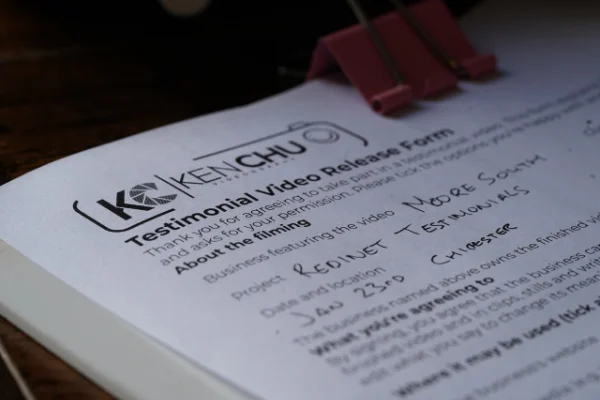
Release forms and consent
Permission is often over looked, because its deemed the boring side of lights, camera and action. But it is important. In the UK the CAP Code are the rules the Advertising Standards Authorty enforces. These state that if you are using a customer testimonial you need to make sure you have evidence that it is genuine together with the persons contact details and their permission to use it.
Our guide to filming people at events: consent, GDPR and signage explains the wider rules; the principles are the same for testimonials.
A testimonial release should state:
- who is filming, and who will hold the footage
- where the video may appear: website, social channels, presentations, paid advertising
- whether the person’s name, job title and organisation will appear on screen
- how long the video may be used for
- how they can withdraw consent, and what happens if they do
As the business, this is your responsibility rather than the video production company, videographer or filmmaker. It’s their job to remind you of this responsibility. But ultimately, the tast of getting these release forms lies with you, which makes sense because its your relationship with your customer.
Editing: structure, length and subtitles
We’ve discussed the structure earlier on and we will follow that in the edit. But what is especially effective in this day of short attention spans is hooky beginning. To do this, we extract the strongest line somewhere in the video, duplicated it and put in in the front of the video. So it starts with the result or a a statement that really brings home the overal benefit of your product. A line like:
- “Our business has never been the same again”
- “The partnership is what makes our business thrive”
- “This product has changed everything and we can’t wait to see what the future brings”
Length depends on where the video will live:
| Placement | Recommended length | Format |
|---|---|---|
| Website service page | 60 to 120 seconds | Landscape |
| Case study page or proposal | 2 to 4 minutes | Landscape |
| LinkedIn feed | 30 to 90 seconds | Square or portrait, subtitled |
| Instagram and short form social | 15 to 45 seconds | Portrait, subtitled |
Where testimonial Videos convert best
Testimonial videos work hardest closest to the moment someone decides. In rough order of impact:
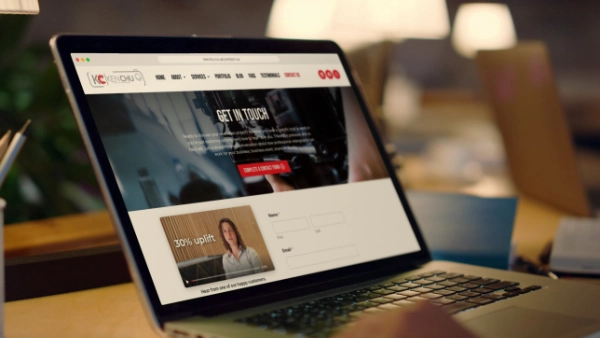
- Next to your enquiry form or on your contact page. Testimonial videos are great converters from people who are thinking about using your service to people who actually get in touch. So the bit on your website where they actually need to take action is a great place for your video.
- On the matching service page. This pairs really well on your website where people are reading about a specific case study for a type of work you do. If the video features that type of work then then the video and the website copy empower each other.
- Alongside pricing information. The testimonial shows people why you cost a certain amount.
- In proposals and follow up emails. In the initial meeting it pays to mention that you may have done similar work to what they are asking for before. A testimonial video sent to them after that meeting really hammers that home.
- On LinkedIn. The social media aspect is key to getting your customers involved so they will be expecting you to use this in social media to shine the spotline of them. In turn, they will share and repost, so it spreads the word further to their connections also.
- On your Google Business Profile. Again this is another point of conversion where people are deciding to get in touch with you. A testimonial video might just tip them into action.
Its tempting to put these videos on your website homepage, but this is not the most effective way to use it. Although, if you have a few testimonial videos made, you can make a compilation of the strongest bits in one video that lives on your home page. Or certain lines can be used in your homepage brand/prouct video.
When it comes to video hosting, the videos should be uploaded to a platform such as YouTube or Vimeo as this helps them load quickly. Avoid uploading them to your websites media library as this will slow the loading of the video asset. On these video platforms you can also upload custom thumbnails which will show on that platform as well as the video on your website. Use a picture of your client if its being taken as a screenshot from the video itself (people are attracted to humans, don’t forget!). Or better yet, create a new picture to be used as a custom thumbnail.
Measuring whether it is working
Three simple measures tell you most of what you need:
- Enquiry rate on the page. Have you enquires gone up since the video was launched?
- Play rate and average viewing time from Vimeo or YouTube. Whats blocking people to the video? Website placement? Are people only watching the first few seconds? This means the hook at the start isn’t resonating with your potential customers.
- What new clients tell you. Ask them and keep a record of how people are discovering you and where their point of conversion is. If the data points towards the video then you know you’re onto a winner. Do more of it!
Common mistakes to avoid
Over preparing the customer:
The most common mistake, by far, is people over-preparing their answers. There’s no need for anyone to get heavily scripted, and it’s worth remembering this is a conversation, not a recital.
What usually happens is the interview questions get sent to the customer beforehand, which is fine. But the tendency, especially in very technical fields, is for people to over-prepare. They script their answers out and try to learn them.
That’s not the way to do it.
What you actually want is to shape a conversation and capture it, because a conversation gives you something human. And the human stuff is the whole point, because people buy from people. They want to see someone like them. Someone who makes little mistakes, who says ‘um’ and ‘ah’, who repeats themselves slightly, who glances off into the corner of the room searching for the right word. And then finds it, and delivers it with real enthusiasm. Those are the moments you want to catch. When it’s all scripted, that spontaneity is the first thing to go.
No clear narrative:
If there’s no story to hang the testimonial on, there’s nothing for the viewer to catch hold of, and it becomes a bit of a boring watch. Without that shape, it’s just a person talking.
Overpacking the video
Linked to that is overpacking. It’s very easy to do. I’ve seen clients try to make fifteen or twenty minute videos that go on far too long, with the customer walking through every single feature they use. People just don’t watch that. They drop off really quickly.
Other Mistakes
- Choosing the biggest name instead of the most relevant client.
- Making the film about your business rather than the client’s experience. They are the main character; you are the help they found.
- Cutting out every pause and hesitation until the client sounds like an advert.
- Leaving the release form until after filming.
- Using one interview once. A single shoot should give you a main film, short clips and quotes for your website.
What does a testimonial video cost?
Cost depends on how many clients you film, how many locations are involved and how many versions you need. A single client interview filmed in a half day, with one main edit and a few short clips, sits towards the lower end of a typical project. Our guide to how much a videographer costs sets out day rates, post production fees and typical prices ranges by type of video including testimonials.
How long should a testimonial video be?
How do I get customers to do a video testimonial?
What questions should I ask in a testimonial video?
Do I need a release form for a testimonial video?
Should testimonial videos be scripted?
Can a testimonial video be filmed remotely?
Ready to film your first testimonial?
A good testimonial video does a job that nothing else in your marketing can: it lets a real client vouch for you, in their own words, at the moment a prospect is deciding. The process is straightforward once it is planned well, and most clients enjoy taking part more than they expected.
We film testimonial and case study videos for businesses across London and the South East as part of our business videography service, and for charities, where supporters, volunteers and partners can speak powerfully about your work, through our charity video production service. If you have a client story worth telling, get in touch and we can talk through how to film it.